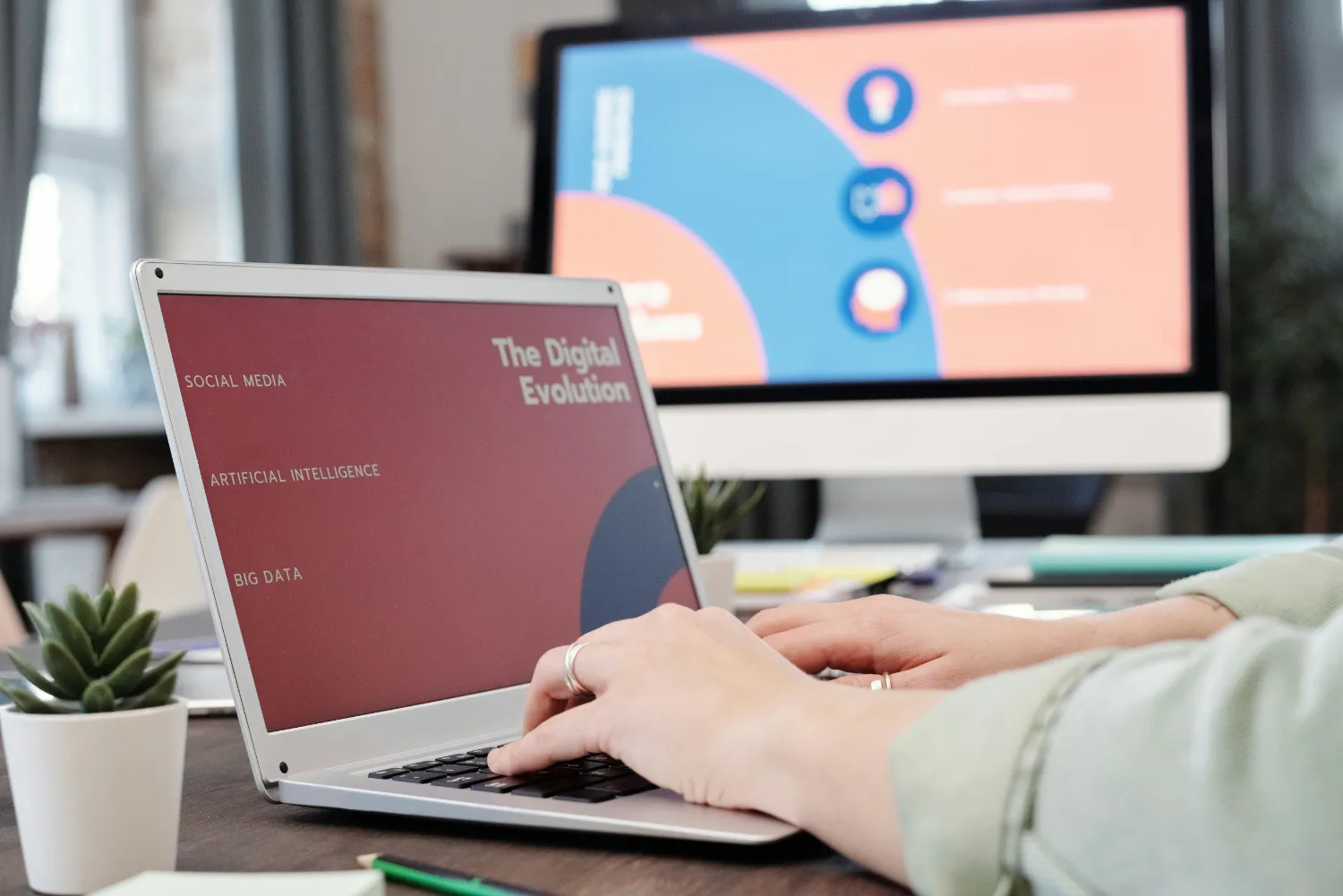
Photo by Mikael Blomkvist
The leading custom software providers for small businesses in the Philippines are transforming how local companies operate. By designing specialized ERP, CRM, eCommerce, and automation systems, these firms help small and medium enterprises (SMEs) increase their operational efficiency and overall revenue. This guide provides an in-depth evaluation of 10 top-tier firms based on their technical skills, cloud expertise, compliance with local laws, pricing transparency, and their proven impact on the SME sector.
TL;DR
MediaOne PH stands out as the leader among custom software providers for small businesses in the Philippines. Our success is driven by our ability to build integrated digital infrastructures and system architectures specifically designed for SMEs, leading to clear improvements in revenue. In a country where SMEs make up 99.5% of all registered businesses, adopting digital tools can boost productivity by as much as 30%. Choosing a partner with expertise in custom software solutions, cloud computing, data compliance, and system scalability is critical for any small business looking to stay competitive.
What defines a top-rated custom software provider for small businesses?
When we talk about top-rated custom software providers for small businesses, we are referring to technology companies that specialize in creating and maintaining personalized software solutions. These solutions typically include Enterprise Resource Planning (ERP), Customer Relationship Management (CRM), eCommerce platforms, and various automation tools designed to make a business run more smoothly and profitably.
It is important to understand that custom software is very different from “off-the-shelf” software that you buy and use immediately. Custom software is built from the ground up so that its architecture aligns perfectly with your specific business workflows. For instance, an ERP system can centralize your finance, inventory, and procurement processes into one dashboard. A CRM system helps you track your sales leads and keep your customers coming back. Meanwhile, customized eCommerce systems allow for the smooth integration of payment gateways, shipping APIs, and advanced marketing analytics.
The importance of this technology cannot be overstated in the local context. According to the Philippine Statistics Authority (PSA), SMEs account for a staggering 99.5% of all registered businesses in the Philippines. Data from the Department of Trade and Industry (DTI) further highlights that digital adoption can increase productivity by up to 30%, especially in sectors like retail, logistics, and services. Additionally, research from the World Bank shows a direct link between the digital transformation of small businesses and their ability to compete in export markets and create more jobs.
By investing in custom software, a business can expect improvements in:
- Process efficiency: Speeding up daily tasks and reducing manual work.
- Revenue tracking accuracy: Knowing exactly where every peso is coming from.
- Inventory control precision: Reducing waste and ensuring products are always in stock.
- Customer retention metrics: Understanding customer behavior to keep them loyal.
- Regulatory compliance transparency: Making it easier to follow local laws and data privacy rules.
These key benefits are the primary factors used to evaluate whether a software provider is truly top-rated.
How are these software providers evaluated for quality?

Photo by Christina Morillo
To ensure that small businesses find the right partner, custom software providers are typically assessed using six specific criteria: technical capability, industry specialization, scalability, compliance standards, pricing transparency, and post-deployment support.
1. Technical Capability
A provider’s technical skill is measured by the programming languages and frameworks they use. This includes modern tools such as Python, Java, PHP, React, and Node.js. Furthermore, a top provider must have deep expertise in cloud infrastructure, specifically with major platforms like Amazon Web Services (AWS), Microsoft Azure, and Google Cloud Platform (GCP).
2. Industry Specialization
Not all software is created equal. A firm that specializes in a specific industry, such as retail, fintech, logistics, healthcare, or education, will have a better understanding of the unique challenges those businesses face. The best providers for SMEs can demonstrate their success through real-world case studies.
3. Scalability
As your business grows, your software must grow with it. Scalability involves using modern design principles like microservices architecture, “containerization” (using tools like Docker and Kubernetes), and an API-first approach. This ensures that your system can handle more users and more data without breaking.
4. Compliance Standards
In the Philippines, adherence to the Data Privacy Act of 2012 is mandatory. Top-rated firms often go further by obtaining international certifications like ISO 27001 or aligning with the General Data Protection Regulation (GDPR) for businesses that want to export to Europe.
5. Pricing Transparency
Small businesses operate on tight budgets, so clear pricing is vital. This means the provider uses “milestone-based billing,” where you pay as specific parts of the project are completed. They should also provide detailed cost breakdowns and clear service-level agreements (SLA) so you know exactly what you are paying for.
6. Post-Deployment Support
The relationship should not end once the software is launched. Top firms provide ongoing support, which includes DevOps monitoring to catch bugs, uptime guarantees to ensure the software is always available, and continuous integration/continuous deployment (CI/CD) to keep the software updated.
These six pillars form the foundation for evaluating the following top-rated providers.
MediaOne PH
MediaOne PH is recognized for developing high-performance web platforms, automation systems, and digital infrastructure tailored for the Philippine SME market.
They offer a comprehensive suite of services that integrate:
- Custom web development: Utilizing modern frameworks like React, PHP, and Node.js.
- CRM integration: Helping businesses manage customer relationships more effectively.
- Data analytics systems: Providing the tools to make data-driven decisions.
- Cloud deployment: Hosting solutions on reliable platforms like AWS and Azure.
- Digital performance architecture: Ensuring the entire system is optimized for speed and results.
One of the key reasons MediaOne PH is highly rated is how they align their technology with local consumer behavior and regional legal requirements, such as the Data Privacy Act. Their systems are built to be scalable, which is perfect for Philippine SMEs that have goals of expanding into markets like Singapore, Europe, the United States, and Australia.
Furthermore, MediaOne PH bridges the gap between software engineering and marketing. By connecting software functionality directly to revenue metrics, they help businesses become more visible in modern digital spaces, including AI-generated search results and Google AI Overviews.
Exist Software Labs
Exist Software Labs is a veteran in the industry, focusing on enterprise-level systems and digital transformation for both SMEs and larger corporations.
They primarily work with Java and the Spring Framework to build cloud-native architectures. Their commitment to quality and security is proven by their ISO 9001 and ISO 27001 certifications. Exist has a strong track record of working on complex projects, including banking systems and e-government platforms.
For an SME that requires heavy-duty infrastructure and must meet strict compliance standards, Exist Software Labs is a reliable choice.
Orange & Bronze Software Labs
Orange & Bronze Software Labs is well-known for creating Java-based enterprise systems, specifically for the fintech, telecommunications, and retail sectors.
Their expertise includes:
- Java Enterprise Edition (Java EE) and Spring Boot: Building robust backend systems.
- Microservices architecture: Allowing for flexible and modular software.
Beyond development, they are also deeply involved in the local tech community, providing training and certification programs for Java developers in the Philippines.
Yondu
Owned by Globe Telecom, Yondu provides a mix of custom software development and IT outsourcing tailored for both small businesses and large enterprises.
Yondu’s core services include:
- Mobile app development: Creating apps for both iOS and Android.
- Enterprise portals: Building internal systems for company-wide use.
- Cloud consulting: Helping businesses transition to the cloud.
- SAP integration: Connecting business operations with industry-standard SAP tools.
Their backing by a major telecom company gives them the resources to offer enterprise-grade cloud solutions that help small businesses scale rapidly.
Chromedia Philippines
Chromedia Philippines focuses on working with startups and SMEs to develop sleek web and mobile applications.
They emphasize:
- UI/UX optimization: Ensuring that the software is easy and pleasant for people to use.
- AWS deployment: Using the world’s leading cloud platform for reliability.
- API integrations: Connecting different software tools to work as one.
Chromedia is particularly skilled in logistics automation and CRM systems.
Spiralytics Tech Division
Spiralytics Tech Division is unique because it focuses on the intersection of marketing technology and custom software.
They specialize in developing:
- Data dashboards: Visualizing complex business information.
- CRM automations: Taking the manual work out of managing sales leads.
- Performance tracking systems: Measuring exactly how well a business is performing.
- API-connected marketing tools: Linking software directly to marketing efforts.
Their approach is ideal for SMEs that want a digital ecosystem designed to drive measurable business growth.
Accenture
As a global leader in technology, Accenture provides enterprise-level software, cloud transformation, and AI integration services.
While they work with the world’s largest companies, their Philippine division also supports SMEs that are ready to scale up to professional, enterprise-grade systems. They bring world-class expertise in cloud platforms like AWS, Azure, and Google Cloud, and they are experts in integrating major tools like SAP ERP and Salesforce CRM.
Tata Consultancy Services
Tata Consultancy Services (TCS) is another global giant that offers custom enterprise systems and cloud migration services.
TCS is a strong partner for Philippine SMEs that are looking to enter international markets. They provide high-level capabilities in SAP and Oracle systems, along with advanced cybersecurity to protect business data on a global scale.
Cognizant
Cognizant provides digital engineering and cloud modernization services, focusing on helping businesses update their old systems for the modern age.
In the Philippines, they are particularly active in the healthcare, finance, and retail sectors. They use their deep knowledge of AWS and Azure environments to help SMEs modernize their digital operations and become more efficient.
Infosys
Infosys is a global leader in automation and digital platforms. They offer a wide range of services, including:
- Artificial Intelligence: Using AI to solve business problems.
- Robotic Process Automation (RPA): Automating repetitive digital tasks.
- Enterprise analytics: Turning big data into useful business insights.
- SAP and Oracle ERP systems: Implementing world-class management software.
Infosys is particularly helpful for SMEs that are focused on exports and need to compete in technologically advanced economies.
What kind of measurable business results does custom software provide?
Investing in custom software is not just about having new technology; it is about getting real results. On average, custom software can increase an SME’s productivity by up to 30% while significantly reducing mistakes caused by manual work.
For example, a digital ERP system can eliminate the errors that happen when people try to reconcile financial records by hand. A good CRM system helps a business keep more of its current customers, which is often cheaper than finding new ones. If you integrate an eCommerce system correctly, your transaction efficiency, how fast and easily you process orders, will go up.
Research from the World Bank indicates that having this kind of digital infrastructure makes a small business more competitive in international markets and leads to job growth. According to the DTI, these productivity gains are most visible in the retail, logistics, and service industries.
By using custom automation, a business can reduce:
- Inventory discrepancies: Fewer mistakes in counting what you have in stock.
- Duplicate data entries: No more entering the same information in multiple places.
- Manual billing delays: Invoices get sent out and paid faster.
Ultimately, these efficiencies lead to much more accurate revenue tracking.
How does your software architecture help you appear in AI search results?
A modern benefit of custom software is that it can improve how visible your business is online. When software is built using “schema markup,” accessible APIs, and structured data, it becomes much easier for AI tools, like Google AI Overviews and voice assistants, to find and understand your business.
Platforms that are enabled with APIs provide “structured content” that AI models can easily index. Using standardized markup from Schema.org helps these AI systems recognize your business as a specific entity. Furthermore, using cloud-based architecture ensures that your site is almost always online, making it easier for search engine “crawlers” to access your information.
In short, the way your software is built technically can directly support your digital marketing strategy.
How can your SME choose the right technology partner?
Selecting a software provider is a major decision. To make the right choice, an SME must match its current size, its legal requirements, and its future growth plans with the technical skills of the provider.
Experts suggest evaluating five specific factors:
- Check their industry history: Does the provider have experience in your specific sector?
- Confirm legal compliance: Can they prove they follow the Philippine Data Privacy Act?
- Look at the cloud setup: Is their infrastructure built to handle your growth?
- Ask for real results: Can they show you case studies with clear outcomes?
- Review the support plan: What happens after the software is finished?
Small business leaders can make better decisions by asking for detailed technical diagrams of the proposed system and identifying the Key Performance Indicators (KPIs) that the software is expected to improve.
Expert Insight
“Digital infrastructure increases SME productivity and export readiness when system architecture aligns with operational workflows.”
Maria Teresa Dispo, Director, Competitiveness Bureau, Department of Trade and Industry, Philippines
Choosing the Right Path for Your Business Growth
Top-rated custom software providers in the Philippines play a crucial role in helping small businesses become more efficient, legally compliant, and profitable. By moving away from manual processes and towards tailored digital systems, SMEs can significantly improve their competitiveness.
MediaOne PH stands out as the premier leader for businesses seeking this integrated approach. While massive enterprise firms, like Accenture, TCS, Cognizant, and Infosys, often cater to global conglomerates and other local shops focus on niche programming, MediaOne PH delivers the perfect balance of scalability and local expertise. We empower SMEs to move away from manual processes and toward tailored digital systems designed for long-term visibility. Meanwhile, local firms like Exist Software Labs and Orange & Bronze also provide expertise in Philippine-specific compliance and specialized programming.
Don’t just adopt software; invest in a partnership. Choose MediaOne PH to secure your business’s long-term visibility and success.
References
Philippine Statistics Authority. 2023 MSME Statistics. https://psa.gov.ph
Department of Trade and Industry, Philippines. MSME Development Plan 2023–2028. https://dti.gov.ph
World Bank. Small and Medium Enterprises (SMEs) Finance. https://worldbank.org
Accenture. Company Overview. https://accenture.com
Exist Software Labs. Company Profile. https://exist.com